
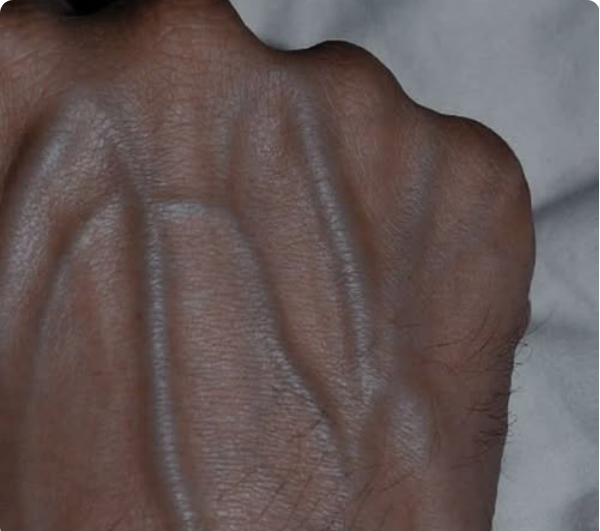
It’s common to notice visible veins on your hands, arms, or legs—especially if you’re lean, athletic, or getting older. In many cases, prominent veins are harmless and result from low body fat, exercise, aging, or genetics.
However, suddenly visible, bulging, painful, or discolored veins can sometimes signal an underlying medical condition—some of which may be serious.
Below are five medical conditions that can cause noticeable veins and what you should know about them.
1. Chronic Venous Insufficiency (CVI)
What It Is
Chronic Venous Insufficiency occurs when the valves in the leg veins weaken or fail, making it difficult for blood to flow back to the heart. Blood then pools in the legs, causing veins to stretch, bulge, and become visible.
Symptoms to Watch For
Twisted, rope-like, or swollen veins
Aching, heaviness, or cramping in the legs
Swelling in the ankles or calves
Skin discoloration (brownish tint)
Venous ulcers near the ankles
Who’s at Risk
People who sit or stand for long periods
Pregnant women
Older adults
Those with a family history of vein disease
Why It Matters
Untreated CVI can lead to blood clots, skin infections, and slow-healing open sores.
2. Varicose Veins2. Varicose Veins
What It Is
Varicose veins are enlarged, twisted superficial veins—usually in the legs—that appear dark blue or purple. While often considered cosmetic, they can indicate deeper circulation problems.
Symptoms
Bulging or raised veins
Itching, burning, or throbbing