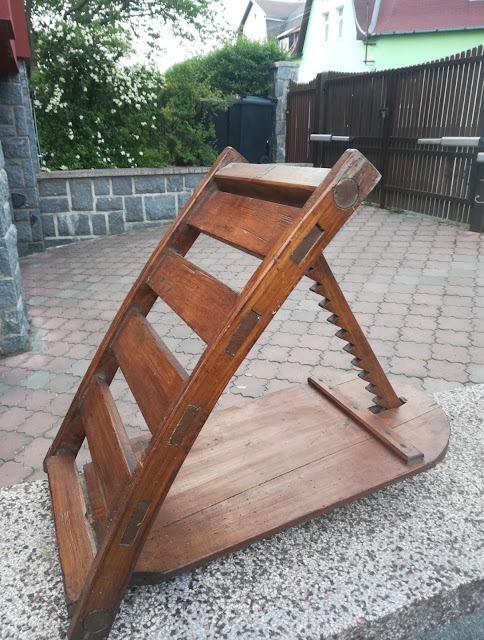
You’ve stumbled upon a beautiful piece of culinary history: a traditional wooden cheese press—a quiet but powerful symbol of self-reliance, patience, and the art of transforming simple ingredients into something nourishing and lasting.
🧀 What It Is: A Wooden Cheese Press
This isn’t just “an old wooden appliance.” It’s a manual cheese press, commonly used in farmhouse kitchens from the 18th through early 20th centuries. Crafted from hardwoods like maple, oak, or beech, it was designed to compress fresh cheese curds after they’d been separated from whey, shaping them into dense, aged wheels or blocks.
How it worked:
Curds were placed in a cloth-lined mold (often cylindrical) inside the press. A heavy screw or lever mechanism applied steady, adjustable pressure over hours or even days, slowly expelling excess whey and binding the curds into a firm, sliceable cheese.
Why wood?
Hardwood is naturally antimicrobial, durable, and doesn’t react with dairy. The grain also allows slight airflow—critical during aging.
🌾 More Than a Tool—A Philosophy
As your reflection beautifully captures, this press represents a slower, more intentional relationship with food:
Self-sufficiency: Families made their own butter, yogurt, and cheese from raw milk—no store required.Seasonal rhythm: Cheese-making often followed spring calving or summer grazing, preserving abundance for leaner months.
Skill & patience: Unlike today’s instant gratification, cheese demanded attention, timing, and care—a craft, not a chore.
“It was a slow build… hour by hour, until the perfect texture was achieved.”
That’s not just about cheese—it’s a metaphor for living well.
🔍 How to Identify a Cheese Press (vs. Other Wooden Relics)
Look for these features:
A base with a drain groove or hole (to channel whey away)
A removable mold or hoop (where curds were packed)
A screw, lever, or weighted arm to apply downward pressure
Smooth, worn surfaces from repeated use—not decorative carving
If it resembles this → [image of traditional wooden cheese press], you’ve found a true heirloom.
hat to Do With It Today
Preserve it: Clean gently with vinegar and water; never soak. Oil with food-safe mineral oil to prevent cracking.
Display it: Hang it in a kitchen or pantry as a tribute to heritage cooking.
Use it: Yes! Many artisan cheesemakers still use vintage presses for small-batch cheddar, feta, or paneer.
Pass it on: Share its story with younger generations—it’s a tangible link to resilience and creativity.
🕰️ The Bigger Picture
In an age of ultra-processed foods and disposable culture, this wooden press is a quiet rebellion. It reminds us that food can be both simple and sacred—that nourishment grows not just from the earth, but from time, care, and human hands.
So honor it. Dust it off. Let it sit on your counter as a daily nudge:
“What can I make with my own two hands today?”
Because the past isn’t just memory—it’s a recipe for the future. 🧀✨
Uncovering the Story Behind This Wooden Artifact