
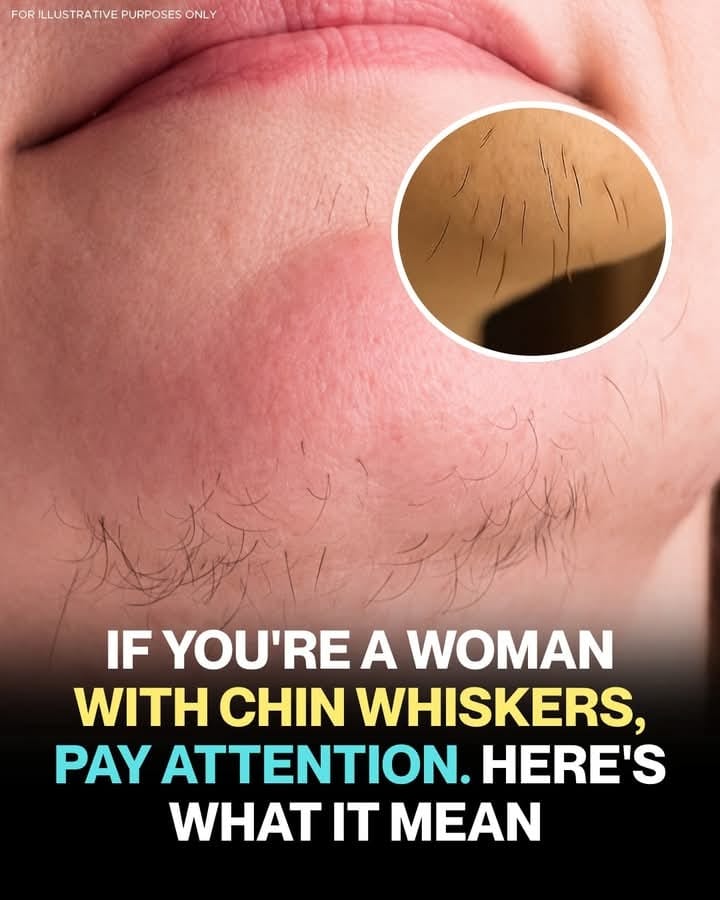
This variability matters. Chin hair can be completely benign—or it can be associated with conditions such as polycystic ovary syndrome (PCOS), insulin resistance, or other endocrine disorders. Blanket assumptions rarely fit. Understanding context—frequency, location, accompanying symptoms—is key to interpreting what the body may be signaling.
The Biology Behind Chin Hair
At a biological level, chin hair develops when fine vellus hair (“peach fuzz”) transforms into thicker, darker terminal hair. This change is driven by androgens, a group of hormones that includes testosterone. While women naturally produce androgens, fluctuations during life stages such as puberty, pregnancy, and menopause can increase their effects on hair follicles.