
“No,” he answered calmly. “Certain landlords respond to practical advantage rather than emotional appeal.”
Leverage.
The word resonated differently spoken by a man who had slept on concrete.
That evening, after Oliver surrendered to sleep, I sat across from Adrian at the kitchen table while trembling hands unfolded the notice demanding payment within ten days or immediate vacancy.
He remained silent, respectful of distance.
“Allow me to inspect the building tomorrow morning,” he finally suggested.
The simplicity of his proposal unsettled me more than any dramatic gesture could have achieved, because my surprise no longer centered upon clean floors or warm soup but upon the unsettling clarity with which he examined my circumstances.
He did not see chaos.
He saw structure.
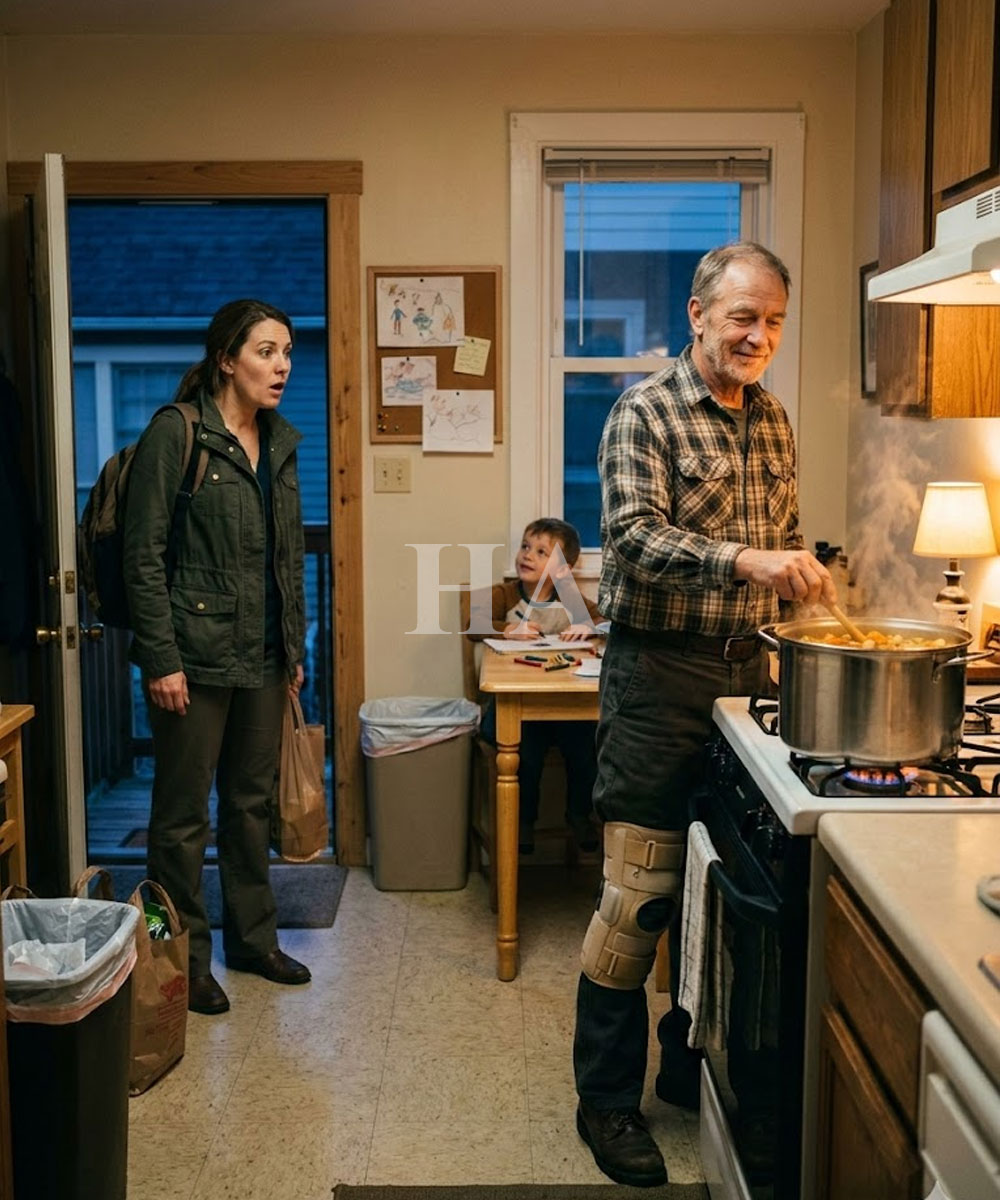
Saturday morning arrived with pale winter light filtering through thin curtains, and although I half expected Adrian to vanish silently during the night like so many fleeting encounters shaped by desperation, he stood waiting at seven o’clock fully dressed, brace secured tightly, my battered toolbox opened before him.
“I will depart when you request departure,” he said quietly. “Until then, I intend to remain useful rather than burdensome.”
We walked toward the building office, a converted storage room tucked awkwardly behind humming laundry machines, where Mr. Pritchard glanced upward with habitual irritation sharpened by years of tenant complaints.
“Your rent remains overdue,” he declared without greeting.
“I acknowledge that reality,” I replied steadily.
His eyes shifted toward Adrian.
“And who exactly accompanies you today?”