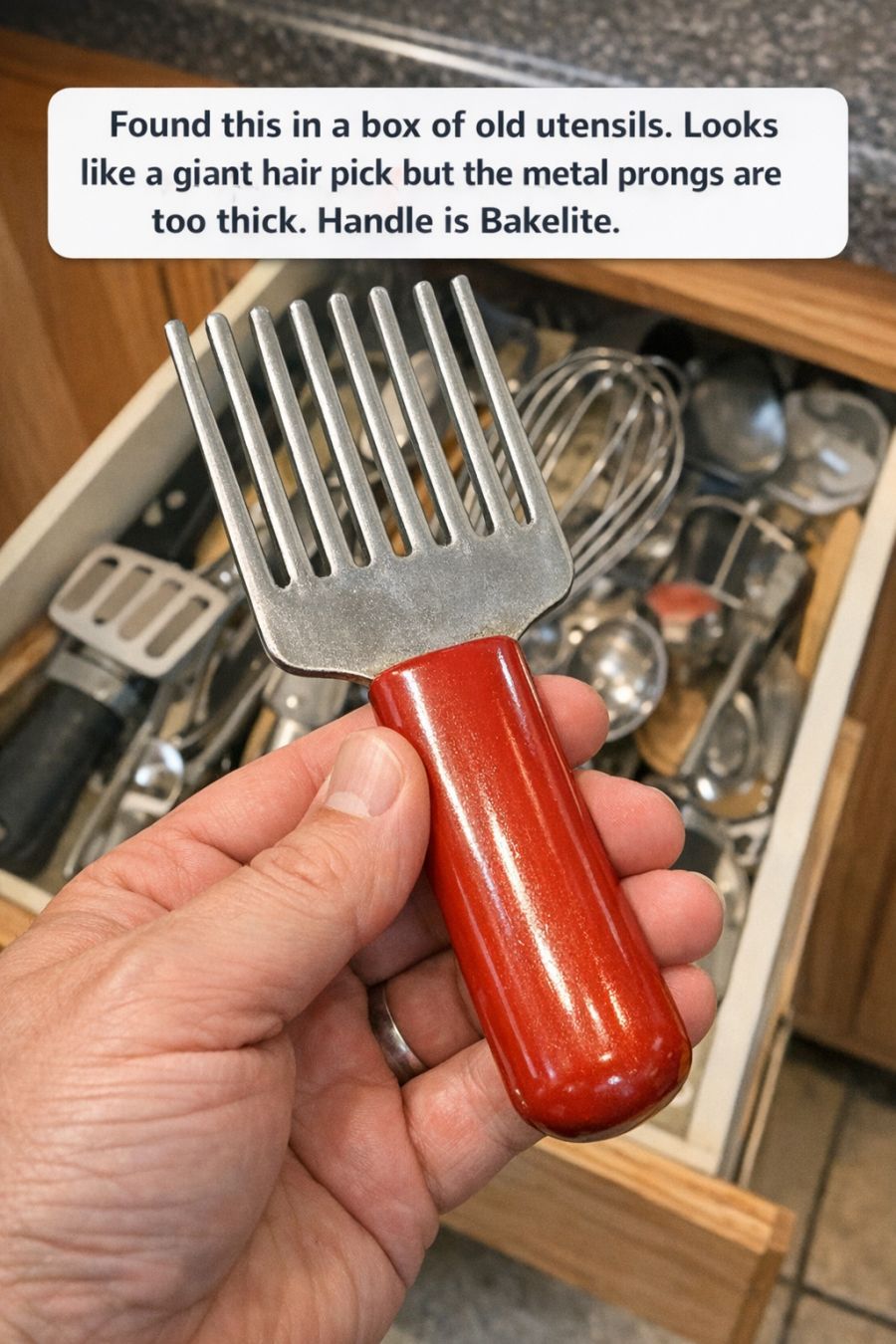
The handle of this mystery utensil is made from Bakelite, an early form of plastic that was widely used in the first half of the 20th century. Developed in 1907 by Belgian chemist Leo Baekeland, Bakelite was celebrated for its heat-resistant properties and durability, making it a popular choice for a variety of household items. By the 1930s and 1940s, it had become a staple material in kitchenware, prized not only for its functionality but also for its ability to be molded into a range of colors and styles.
The presence of a Bakelite handle helps date the utensil to a time period when this material was at the height of its popularity, providing a tangible link to a specific era of kitchen design and innovation. Bakelite's distinctive look and feel also add an element of nostalgia, evoking memories of family kitchens from decades past.
3. Thick Metal Prongs and Wide Spacing: What the Design Tells UsThe thick metal prongs of this utensil are a key feature that sets it apart from other kitchen tools. Typically made from chrome or stainless steel, these prongs are designed to be sturdy enough to slice through the cake, yet gentle enough to preserve its delicate texture. The wide spacing between the prongs, usually about half an inch apart, allows for minimal contact with the cake, which is crucial for maintaining its airy structure.
Found this in a box of old utensils. Looks like a giant hair pick but the metal prongs are too thick. Handle is Bakelite.